



What "Good" Means in Turbine Sealing
A turbine seal is a controlled interface between two regions that want to exchange fluid because of pressure difference, shaft motion, and available clearance. The seal has to manage that path while the machine is hot, rotating, expanding, and sometimes operating far from steady state.
If "good" means only "minimum leakage," the decision drifts toward a seal that wins on paper but can't tolerate shaft excursion, rub events, or startup transients. If "good" means "the best match for the operating envelope," the comparison becomes useful.
A turbine seal has to manage leakage between rotating and stationary components while accounting for clearance, material compatibility, shaft movement, and relative thermal growth. That makes the design question bigger than simply stopping steam or gas from escaping. The harder question is how to control leakage without making the seal itself the weak point as the machine heats up, expands, vibrates, and moves through real operating conditions.
The Selection Criteria That Matter More Than a Seal Category
"Carbon ring," "labyrinth," and "brush" describe architecture, not specification. Before comparing them, define the operating reality of the machine:
-
Leakage target: What level is acceptable for performance, safety, and operation?
-
Contact behavior: Can the seal tolerate contact, or must it stay non-contact?
-
Shaft excursion: How much movement is expected during startup, shutdown, and load changes?
-
Thermal growth: How do shaft, housing, and seal carrier dimensions change at temperature?
-
Wear mode: Which component is intended to wear, and how will that wear be inspected?
-
Mating surface: Is it new, refurbished, coated, or already worn?
-
Maintenance strategy: Planned overhaul, emergency replacement, or new design?
If a supplier can only machine a blank to print, the conversation stops too early. For turbine sealing, grade, geometry, mating surface, and operating assumptions all have to work together.
How Carbon Ring Seals Work in Turbine Applications
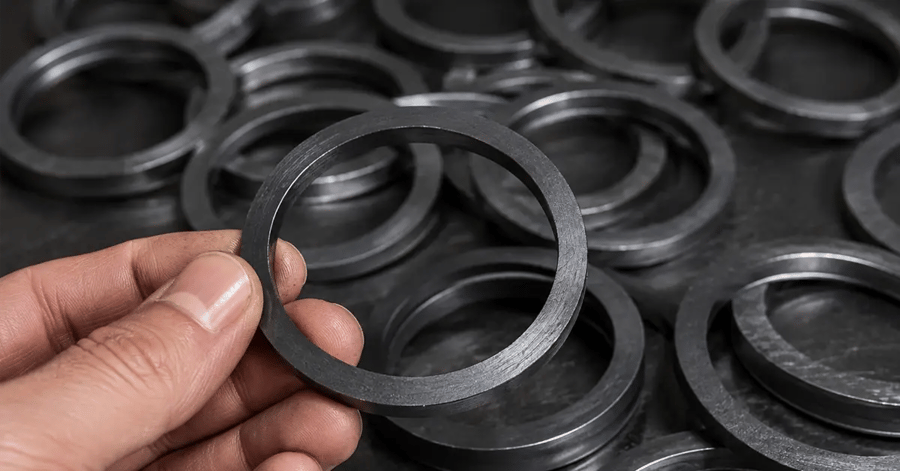
A carbon ring seal uses carbon graphite rings around a rotating shaft to restrict leakage. Depending on the design, the rings can be segmented, spring-loaded, pressure-loaded, or arranged in sets.
The engineering appeal isn't just that carbon graphite seals well. It's that the material behaves well where lubrication is limited, temperatures are demanding, and the interface may experience contact. Carbon graphite is self-lubricating, which is why it gets specified for dry-running and high-temperature sealing. In turbine shaft sealing, that property can make a carbon ring more forgiving than a design that depends entirely on holding a precise non-contact clearance.
"Carbon ring" isn't a single material. A resin-bonded grade, metal-impregnated grade, electrographite grade, or proprietary carbon graphite grade behave differently from each other. The right grade depends on temperature, pressure, speed, atmosphere, mating material, surface finish, and leakage expectations. St. Marys Carbon's electrographite materials and advanced impregnated carbon graphite are examples of grade families that get evaluated for engineered components depending on the application.
Carbon seals get described as "wear items," as they are an important maintenance feature. A controlled wear component protects more expensive mating hardware and creates a predictable inspection point. The wear pattern just has to be expected, stable, and compatible with the service interval.
How Labyrinth Seals Work
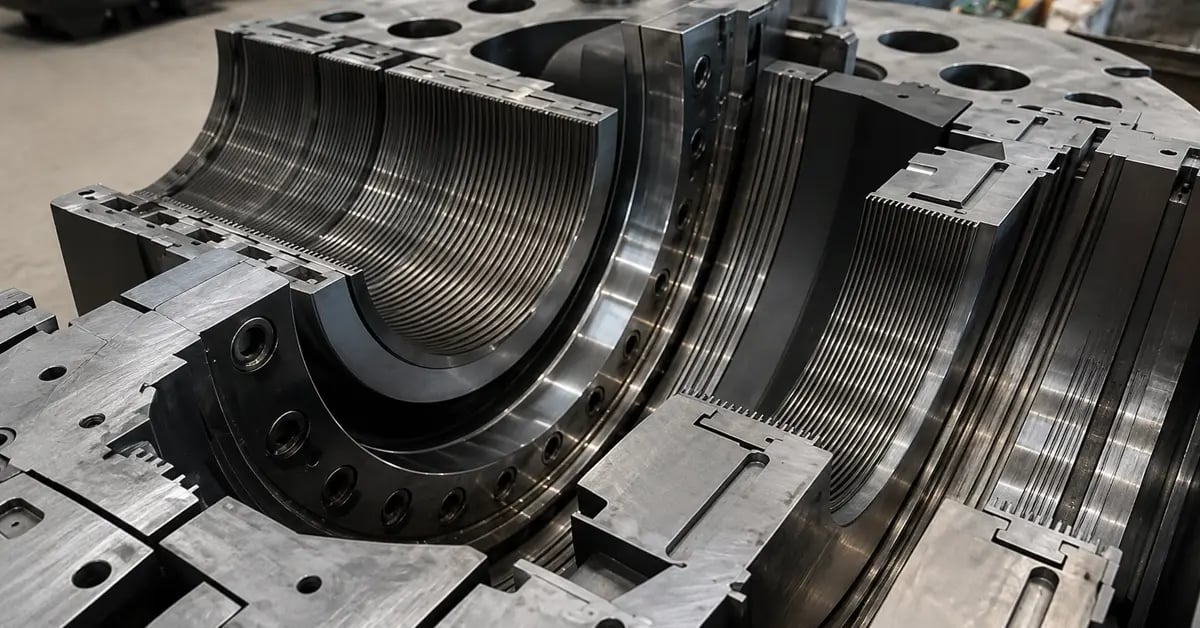
A labyrinth seal restricts leakage through a tortuous, non-contact path. The geometry creates a series of restrictions and cavities that reduce flow. In turbine sealing, the non-contact concept is attractive because it limits direct frictional contact during normal operation.
The strength is also the source of the sensitivity. The design depends heavily on clearance. If the gap changes because of thermal growth, rotor movement, casing distortion, rubs, or wear, performance changes. A labyrinth seal is a strong fit when machine geometry, thermal behavior, and rotor dynamics are well understood. It becomes less straightforward when the design depends on tight clearances but the machine can't reliably hold them.
How Brush Seals Work
A brush seal uses densely packed bristles to create a flexible sealing element around the shaft. The design offers a different balance of leakage control and flexibility than a labyrinth, but it's not a universal upgrade. A brush seal still has to account for shaft surface interaction, bristle wear, thermal conditions, debris sensitivity, and the long-term consequences of contact.
The right question isn't "are brush seals better?” It's "does this turbine application benefit from a compliant bristle interface, and can the surrounding system support it?"
Carbon Ring vs Labyrinth vs Brush: Practical Comparison
Each family has a different way of managing leakage and a different set of tradeoffs.
| COMPARISON FACTOR | CARBON RING SEAL | LABYRINTH SEAL | BRUSH SEAL |
| PRIMARY SEALING METHOD | Carbon graphite rings restrict leakage at or near the shaft interface. | Restricts flow through a tortuous non-contact clearance path. | Uses bristles to create a compliant leakage restriction. |
| CONTACT BEHAVIOR | Designed to tolerate controlled contact. | Typically avoids contact during normal operation. | Allows controlled bristle interaction with the rotating surface. |
| SHAFT-MOTION TOLERANCE | Forgiving when designed for expected movement. | Sensitive to clearance changes and rub events. | More compliant than a rigid clearance feature, but still limited by bristle behavior. |
| WEAR PHILOSOPHY | Carbon graphite may be the designed wear element. | Wear or rubs alter tooth geometry and leakage behavior. | Bristle wear and shaft interaction must be considered. |
| BEST-FIT SITUATIONS | Self-lubricating behavior, conformability, controlled wear. | Predictable clearances, non-contact restriction. | Compliant restriction where brush materials suit the environment. |
When Carbon Ring Seals Are the Better Choice
Carbon ring seals deserve serious consideration when the application benefits from a self-lubricating, engineered sealing material rather than a purely clearance-based restriction. They're especially relevant when:
-
The machine can't be treated as steady-state. Real turbines go through startup, shutdown, load changes, and vibration. Carbon graphite's self-lubricating behavior is useful where some contact is expected or can't be ruled out.
-
You want a defined wear component. Carbon graphite can serve that role when the seal is designed for controlled wear, protecting more expensive mating hardware.
-
The application needs grade-level engineering support. The difference between a successful carbon ring and a frustrating one is often grade selection, not the concept of carbon sealing itself.
-
You're looking at a HALO® turbine or compressor ring application. SMC's proprietary HALO® turbine and compressor rings belong in the conversation when the team wants a manufacturer who'll discuss grade, geometry, testing, and production together.
A labyrinth or brush seal is the right call when the machine can hold predictable clearances or when the design needs a more compliant restriction the bristle system can deliver. The best seal family is the one whose weak points are acceptable in your machine.
Retrofit and New-Design Decisions Are Different
Seal selection changes depending on whether you're designing a new assembly or replacing in existing hardware.
New Designs
In a new design, the engineer can define housing geometry, shaft finish, seal carrier dimensions, grade, and inspection access. The seal should be considered early with material, geometry, loading, and mating surface designed together.
Retrofits
In a retrofit, many of those decisions are already constrained. Document the existing condition before replacing current geometry, observed wear pattern, shaft surface condition, evidence of rubs or scoring, operating changes since the last seal, and outage timing. A print-to-print reorder repeats the same problem if the original design failed for a reason that still exists.
How to Evaluate a Carbon Ring Seal Supplier
A distributor can machine a carbon blank. Turbine seals usually need more including grade knowledge, manufacturing control, tolerance discipline, application review, and honest lead-time planning.
Here are a few questions worth asking:
-
Can the supplier explain why the recommended grade fits the application?
-
Is the supplier manufacturing the component, or only sourcing and machining blanks?
-
Will an engineer review the application before production?
-
Are samples or test support available?
-
Are relevant certifications in place for the program?
-
Is the quoted lead time tied to actual manufacturing requirements?
St. Marys Carbon has manufactured carbon graphite components since 1939. The company is family-run, ITAR registered, AS9100 certified, and ISO 9001 certified. Those qualities help answer the internal question of whether a supplier can be trusted with a component that may not be glamorous but can create real schedule and reliability risk if it's wrong.
Lead time deserves a separate mention. Design engineers routinely underestimate how long custom carbon graphite components take when grade selection, tooling, testing, and production scheduling are all involved. The earlier the application gets reviewed, the easier it is to set a timeline that avoids surprises.
Talk Through the Application Before You Lock the Seal Design
The right turbine seal is the one whose leakage control, wear behavior, shaft-motion tolerance, material grade, and maintenance profile match the machine.
Sometimes that points to a labyrinth seal. Sometimes a brush seal. In many turbine shaft sealing applications, it points to a carbon graphite ring because the interface needs self-lubricating behavior, conformability, controlled wear, and grade-level engineering support.
We’re Here to Help
If you're evaluating carbon rings for steam turbines, reviewing a gas turbine seal application, or comparing a carbon ring against a labyrinth or brush design, bring St. Marys Carbon into the conversation before the design is fully frozen. Talk to a carbon graphite engineer about HALO® ring seals for your turbine application.