



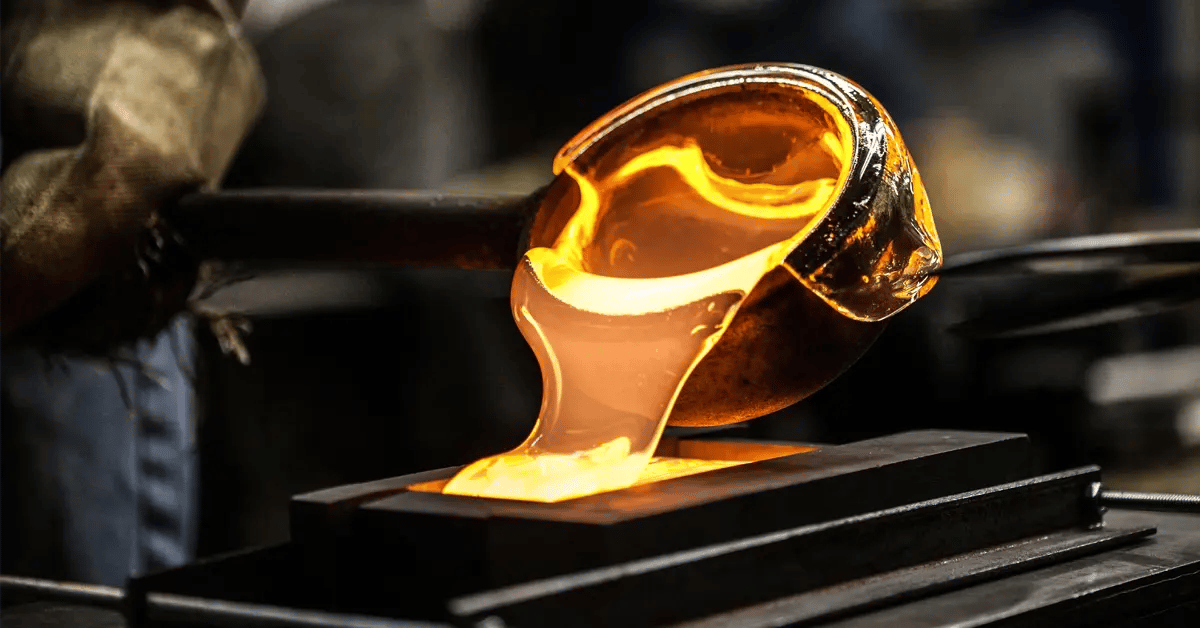
This guide explains how carbon graphite tooling behaves against hot glass, where it works best, and how to think about clean release and surface quality before you commit to a mold design.
Clean Release Starts at the Glass-to-Tool Interface
Carbon graphite works well in many hot glass handling applications because it combines high-temperature stability with favorable surface behavior. The tooling needs to do more than just survive the heat. It needs to maintain shape, transfer heat predictably, and avoid the metal-to-glass interaction that can increase sticking or surface marking in certain processes.
For a glass mold, low thermal expansion matters because the cavity has to stay dimensionally stable as it heats and cools. Thermal conductivity matters too. Carbon graphite can draw heat from the glass surface efficiently, depending on the grade, tool mass, geometry, and contact time. That helps the molded glass hold shape, but it also means contact time and tool temperature have to be controlled. Fast heat extraction is useful when the process is designed around it. It becomes a problem when the glass needs longer forming time against the tool.
That's the practical distinction between hot glass and cold glass handling.
-
Cold glass handling is about grip, cushioning, and avoiding mechanical scratches.
-
Hot glass handling is about thermal response, surface interaction, release behavior, and repeatable geometry under heat.
Carbon Graphite Compared with Common Tooling Materials
Engineers rarely choose graphite molds for glass in isolation. Usually, they're weighing carbon graphite against brass, bronze, steel, wood, or another shop-standard material. The right choice depends on whether the tool is forming, supporting, transferring, or briefly contacting the glass.
| TOOLING MATERIAL | RELEASE BEHAVIOR WITH HOT GLASS | MARKING OR STAINING RISK | THERMAL BEHAVIOR | BEST-FIT USE |
| CARBON GRAPHITE | Favorable when grade and finish are correct | Generally low when surface condition is controlled | Conductive and dimensionally stable under heat | Custom molds, forming tools, transfer tooling, hot glass handling contact points |
| BRASS OR BRONZE | Works well in some glass forming applications | Process-dependent; surface condition matters | Conductive metal response | Traditional mold and forming applications where metal tooling is already qualified |
| STEEL | More dependent on coatings, finish, and process controls | Can be higher if the surface or thermal match is wrong | Durable but a less forgiving interface | Structural tooling, fixtures, and non-critical contact areas |
| WOOD | Useful in some forming traditions | Highly process-dependent | Less aggressive heat extraction than carbon graphite | Short-contact manual forming where its thermal behavior is intentional |
"Non-Stick" Isn't a Material Property You Can Assume
The common shortcut is to call carbon graphite “non-stick.” A more accurate engineering statement is that the right carbon graphite grade and surface condition can reduce adhesion when the mold geometry, dwell time, glass temperature, and release expectations are matched to the process.
Sticking, haze, and witness marks come from several practical sources. The tool surface might be too rough or contaminated. The mold cavity might hold the glass longer than the process allows. The tool might be extracting heat too quickly, or unevenly across the geometry. The grade might not be the right match for repeated thermal cycling and contact conditions.
A production glass manufacturer shouldn't treat a custom graphite mold as a generic machined block. The carbon graphite grade is part of the design. So is the finish. So is how the tool contacts the glass during the cycle.
Where Carbon Graphite Tooling Fits Best
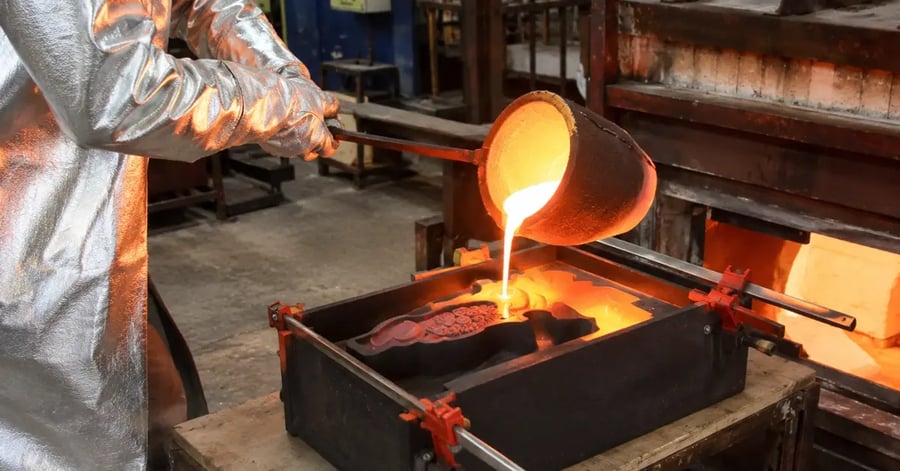
Carbon graphite is often a strong candidate when the glass contact is hot, repeatable, and sensitive to surface quality. That covers molded glass components, forming surfaces, transfer tooling, support tooling, and other contact points where the glass has to release cleanly without secondary cleanup.
It's especially useful in short or intermittent contact situations where the tool has to tolerate heat while helping the glass maintain geometry. Longer-duration forming applications need more careful review. Not "can graphite handle it" but "what happens to the glass surface during the full contact cycle?"
Before specifying graphite molds for glass, define these variables:
-
Glass condition at contact: temperature range, viscosity, and surface sensitivity.
-
Contact time: brief touch, forming dwell, transfer, or support.
-
Surface requirement: acceptable witness marks, haze tolerance, and cosmetic criteria.
-
Geometry: open-face mold, cavity, edge contact, or complex machined profile.
-
Production rhythm: thermal cycling, cleaning practices, and replacement expectations.
The Grade and Machining Plan Matter
Custom carbon graphite tooling is typically machined to the application-specific geometry. That machining step isn't just about shape; it affects edge condition, contact area, and the finished surface the glass will see.
St. Marys Carbon manufactures custom carbon graphite components and has supported demanding industrial applications since 1939. For glass manufacturers, that matters because the right answer often isn't a catalog blank. It's a grade recommendation, a surface-finish discussion, and a tooling design that accounts for how the glass actually moves through the process.
If your team is still comparing materials, start with custom carbon graphite solutions for hot glass handling. For background on how grade selection changes performance, review what carbon graphite is and how it behaves before finalizing the mold design.
Talk Through the Glass Contact Point Before Cutting the Tool
The best time to solve sticking, staining, or marking is before the mold is machined. Bring the glass temperature, contact time, surface requirement, and tooling geometry to the discussion early. St. Marys Carbon's team walks alongside engineers from design to production, helps evaluate the right carbon graphite grade, and sets realistic expectations for custom tooling lead times.
If your application depends on clean release and consistent surface quality, talk to a carbon graphite engineer about hot glass handling tooling before you commit to the mold design.